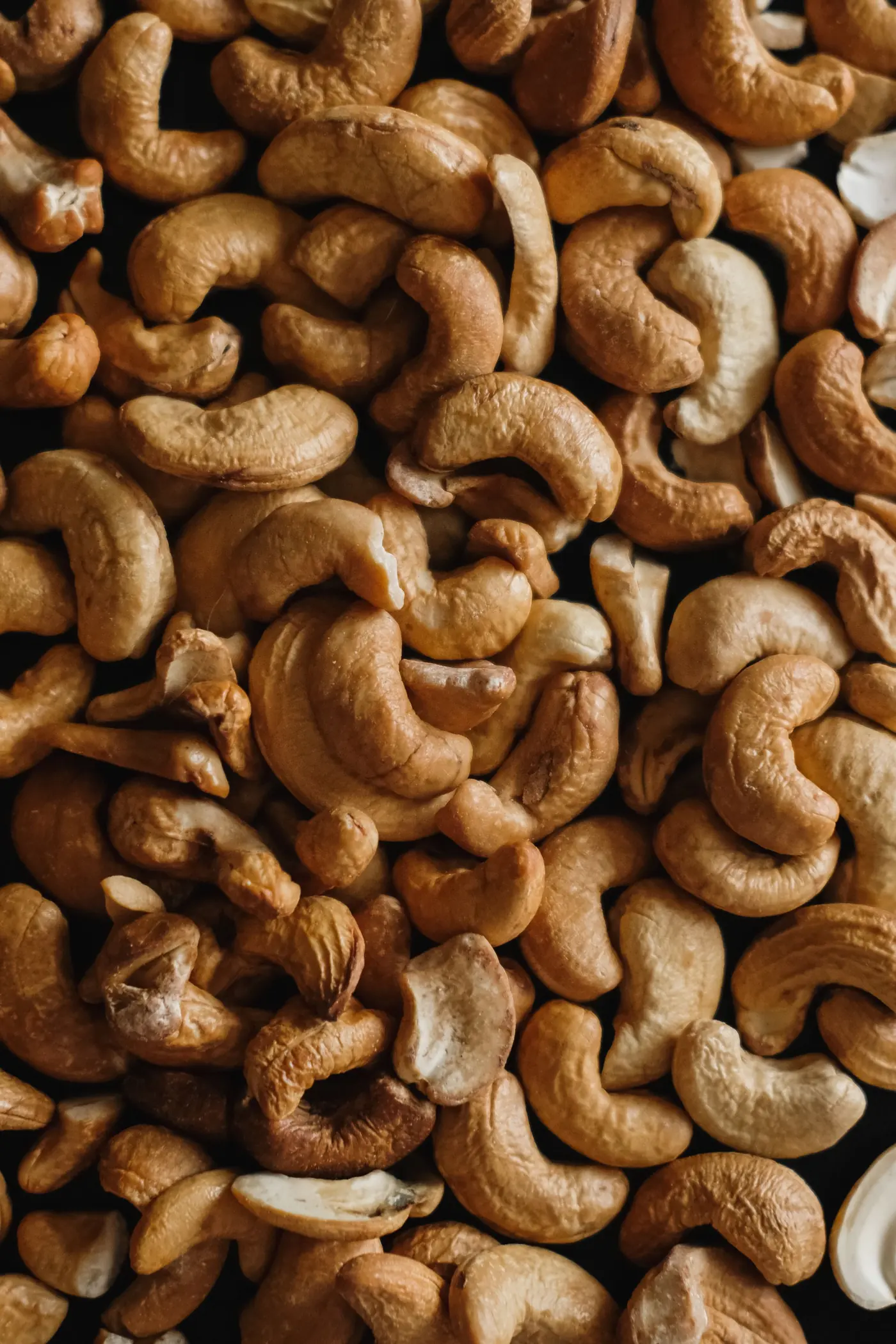
Quick answer: Export cashew kernels are made from raw cashew nuts (RCN) in these main steps: cleaning and sizing, steaming the shell, shelling, drying the kernels, peeling the skin (testa), grading by size and colour, quality testing and vacuum packing. Vietnamese processors mostly use steam cooking, which gives white kernels and keeps the flavour clean.
What is a raw cashew nut (RCN)?
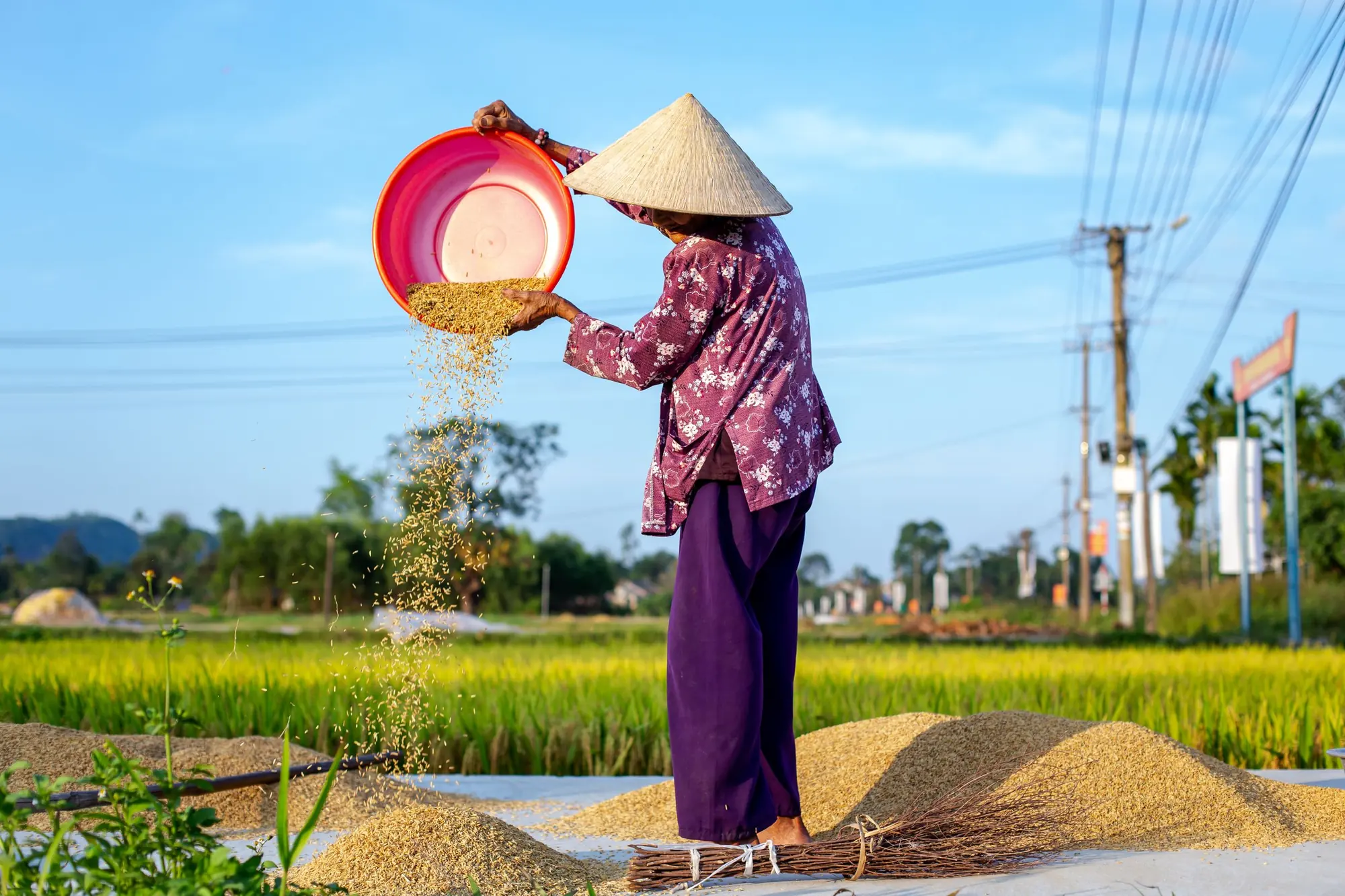
A raw cashew nut is the nut still in its hard shell after being separated from the cashew apple. The shell contains a caustic oil (Cashew Nut Shell Liquid, CNSL), so it cannot be cracked by hand like other nuts. Raw nuts are usually judged by kernel outturn ratio (KOR, pounds of kernel per 80 kg bag of raw nuts), moisture and nut count per kilogram.
The processing steps
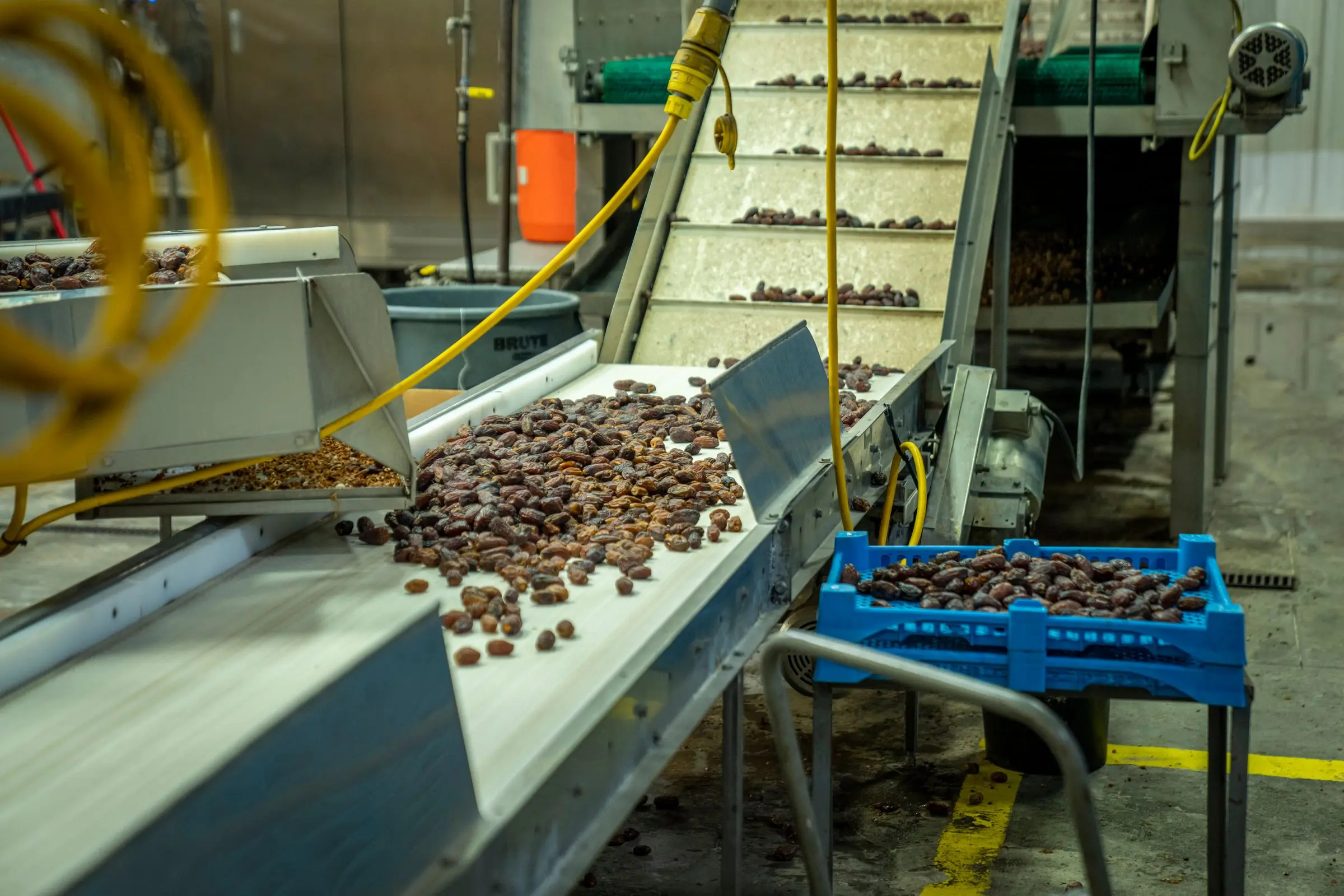
- Cleaning and sizing: remove soil, stones and empty nuts, then sort by size so later steps run evenly.
- Steaming: nuts are steam-cooked so the shell becomes brittle and less shell oil reaches the kernel.
- Cooling and shelling: cutting machines open the shell, calibrated for each size. This step decides how many kernels stay whole.
- Drying: kernels, still in their skins, are dried at controlled temperatures for several hours to lower moisture and loosen the skin.
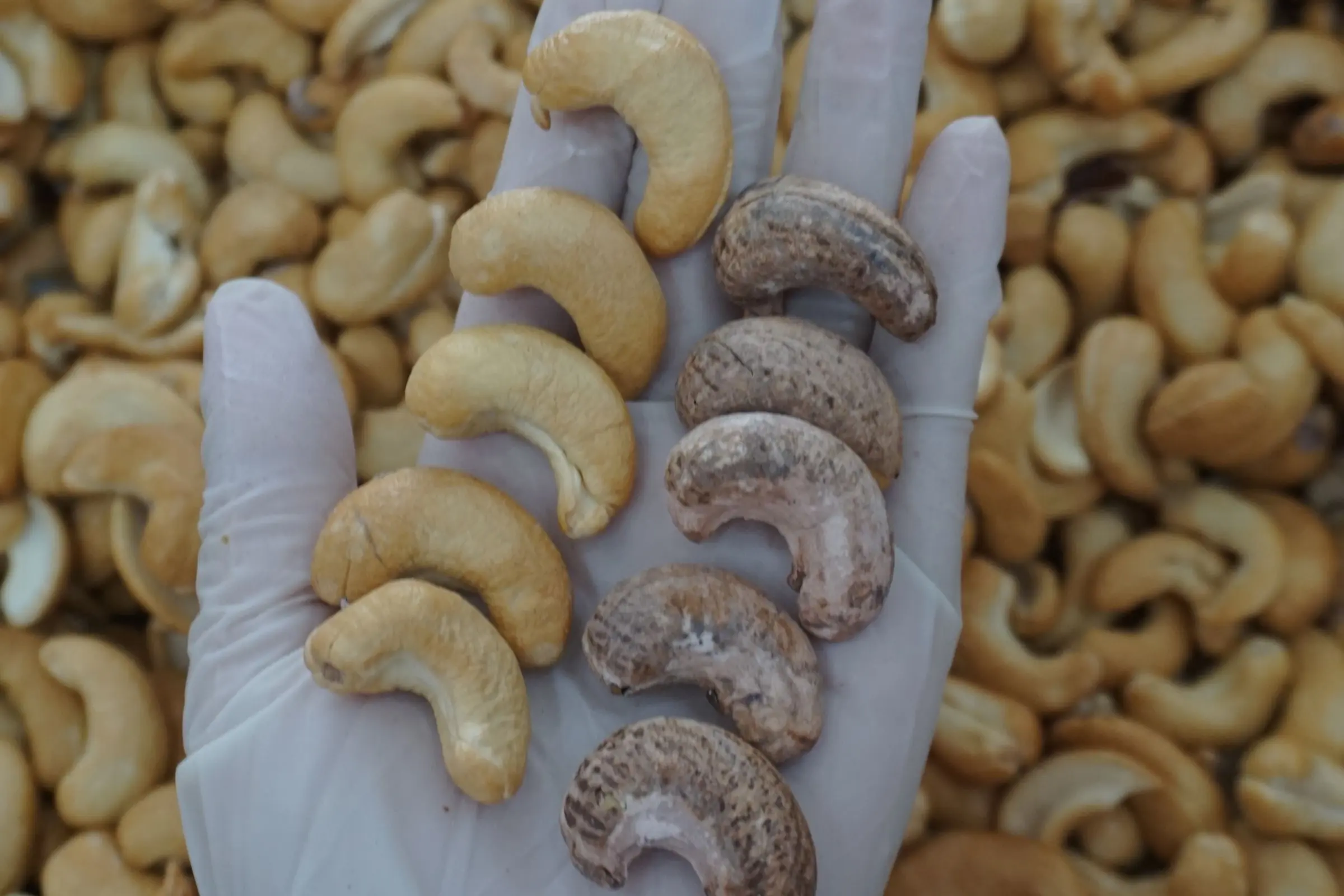
- Peeling: air blowers and careful hand work remove the testa while keeping kernels whole.
- Size grading: sieves separate wholes into W180–W450 and broken kernels into WS, B, LWP, SWP and BB.
- Colour sorting: optical sorters plus visual checks separate white kernels, darker kernels (SW) and defects.
- Moisture conditioning: kernels are brought to the moisture export standards require, usually no more than 5%.
- Quality testing: moisture, foreign matter and broken ratio; microbiology and aflatoxin testing as the destination market requires.
- Packing: vacuum packing flushed with CO₂ or nitrogen, in foil pouches or tins, typically 2 × 25 lb per carton.
Steaming versus oil-bath roasting
There are two common ways to prepare the shell. Steam cooking, used by most Vietnamese factories, gives bright white kernels with little shell-oil contamination. Oil-bath roasting, found in some other origins, is faster but more likely to darken the kernel. This is one reason Vietnamese kernels typically have a high share of white grades.
Key quality checkpoints
- Raw nut moisture before storage, to prevent mould.
- Drying temperature and time, which set kernel colour and crunch.
- Hygiene in peeling and grading, where kernels are handled directly.
- Lot traceability: every finished lot should link back to its raw material and processing date. At VSAP each lot carries a trace code to its growing area and processing date (see our quality process).
Frequently asked questions
Why can't cashews be shelled by hand like peanuts?
The shell contains CNSL, an oil that can burn and irritate skin. Nuts are steamed or roasted first and then shelled by machine, so workers don't touch the shell oil.
How long does cashew processing take?
From raw nut to finished kernel usually takes a few days, most of it for drying and moisture conditioning. The exact time depends on the factory and the grade.
Are export cashew kernels roasted?
Most export kernels are shipped raw (unroasted) so buyers can roast or process them themselves. Roasted and salted or dry-roasted cashews are also available in retail packs.
Sources
- Association of Food Industries (AFI), Specifications for Cashew Kernels — afius.org
- Related: Cashew grades W180–W450 explained
Want to see real specifications and samples? Contact VSAP for samples and a certificate of analysis (COA) per lot.
— VSAP