Quick answer: In a cashew grade, the letters describe colour and shape (W = white whole kernel) and the number is how many kernels make up one pound (0.454 kg). The smaller the number, the bigger the nut. W240 has 220–240 kernels per pound; W320 has 300–320. These grades are used across international trade and follow the specifications of the Association of Food Industries (AFI).
How do you read a cashew grade?
A grade such as W240 has two parts:
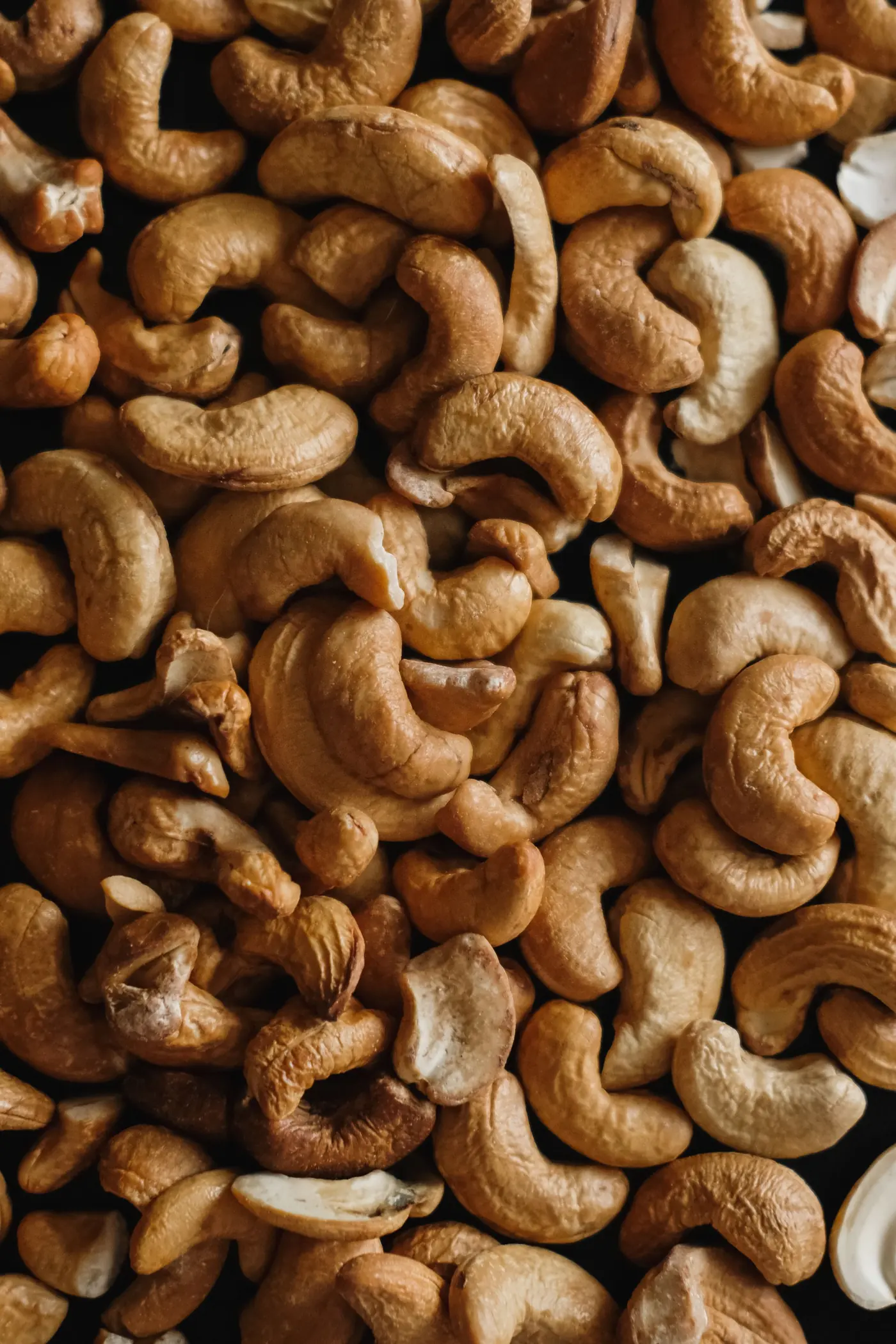
- The letters: colour and shape. W (White) is an ivory, whole kernel. SW (Scorched Wholes) is a whole kernel with a darker tone from longer drying. WS, B, LWP and others are broken kernels.
- The number: whole kernels per pound. In metric terms, W240 is roughly 485–530 kernels per kilogram.
White whole kernel grades
- W180: 170–180 kernels/lb (about 375–395/kg). The largest size, often called the "king of cashews", used for gifting and premium packs.
- W210: 200–210 kernels/lb. Large and uniform, popular in the Middle East.
- W240: 220–240 kernels/lb (about 485–530/kg). A good balance of size and price, widely used for roasted snacks.
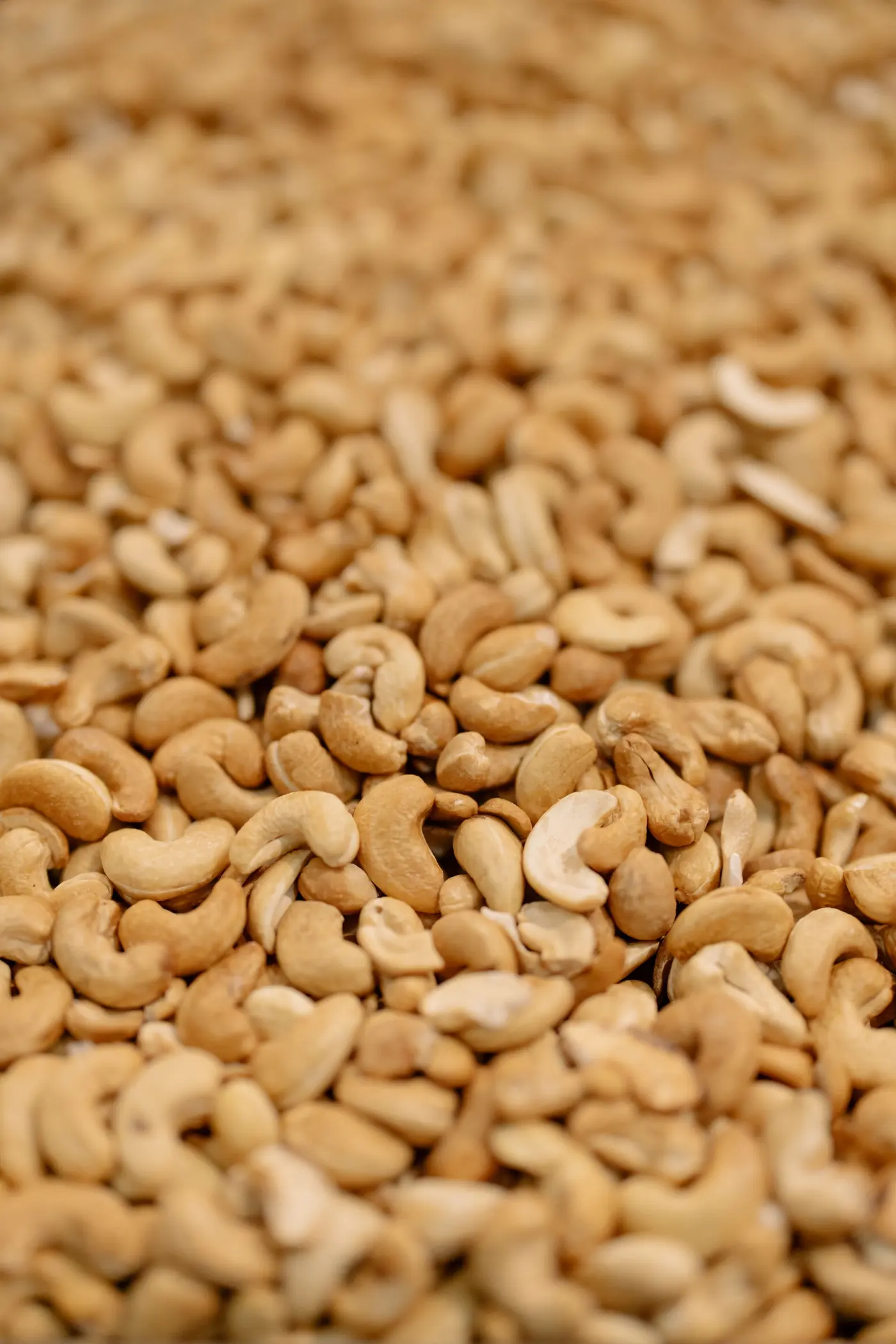
- W320: 300–320 kernels/lb (about 660–705/kg). The most traded grade in the world, used for retail and manufacturing.
- W450: 400–450 kernels/lb. Smaller and economical, suited to bakery, confectionery, nut milks and mixes.
Broken and darker grades
- SW (e.g. SW240, SW320): whole kernels with a darker yellow tone. The taste is almost unchanged and the price is lower.
- DW (Dessert Wholes): wholes with spots or uneven colour, mostly for processing.
- WS (White Splits): white kernels split naturally lengthwise.
- B / WB (Butts): kernels broken crosswise, roughly 3/8 to 7/8 of a kernel.
- LWP (Large White Pieces): pieces that do not pass a 4.75 mm sieve.
- SWP (Small White Pieces): pieces that pass 4.75 mm but not 2.8 mm.
- BB (Baby Bits): very small pieces for toppings and fillings.
Which grade should you buy?
- Premium roasted and salted snacks: W180, W210 or W240.
- Mainstream retail and nut mixes: W320 or W240.
- Nut milk, cashew butter, fillings: WS, LWP, SWP or W450, since the nuts will be ground or chopped anyway.
- Toppings, ice cream, cereals: SWP and BB.
Besides size, agree the accompanying parameters with your supplier: moisture, the allowance for broken kernels and colour. See our guide to export quality standards for cashew kernels.
Frequently asked questions
What is the difference between W240 and W320?
W240 has 220–240 kernels per pound and W320 has 300–320, so a W240 kernel is roughly 30% larger. Both are white whole kernels; W320 is usually cheaper and more widely traded.
Are SW cashews lower quality?
Not really. SW kernels are whole kernels with a darker colour from drying, and the taste is very close to white kernels. They are a cost-effective choice when the nuts will be roasted or seasoned.
How many kilograms are in a pound?
One pound is about 0.454 kg, so kernels per kilogram are roughly kernels per pound multiplied by 2.2.
Sources
- Association of Food Industries (AFI), Specifications for Cashew Kernels — afius.org
- International Nut and Dried Fruit Council (INC) — inc.nutfruit.org
VSAP supplies white whole cashew kernels from W180 to W450, broken grades and roasted cashews, with specifications for every lot. See our cashew range or request a quote to receive samples.
— VSAP