Quick answer: Export cashew kernels are usually required to have no more than 5% moisture, the right size and colour for their grade (e.g. W320), broken kernels and foreign matter within contract limits, no live insects, and to meet the aflatoxin and microbiological limits of the destination market. Results are reported in a certificate of analysis (COA) and can be verified by third parties such as SGS or Intertek.
Physical and sensory parameters
- Size: kernel count per pound matching the grade (W180–W450). See cashew grades explained.
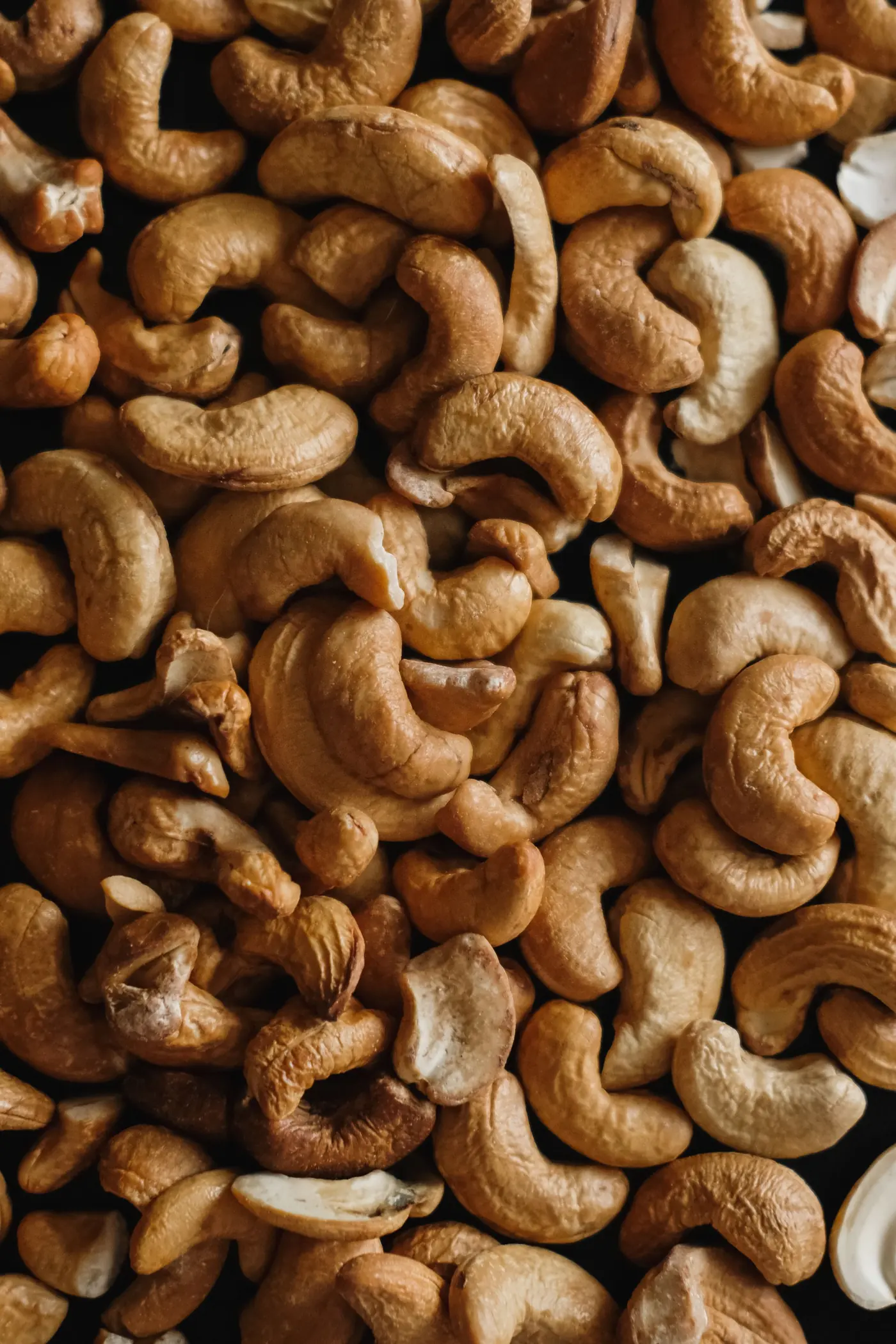
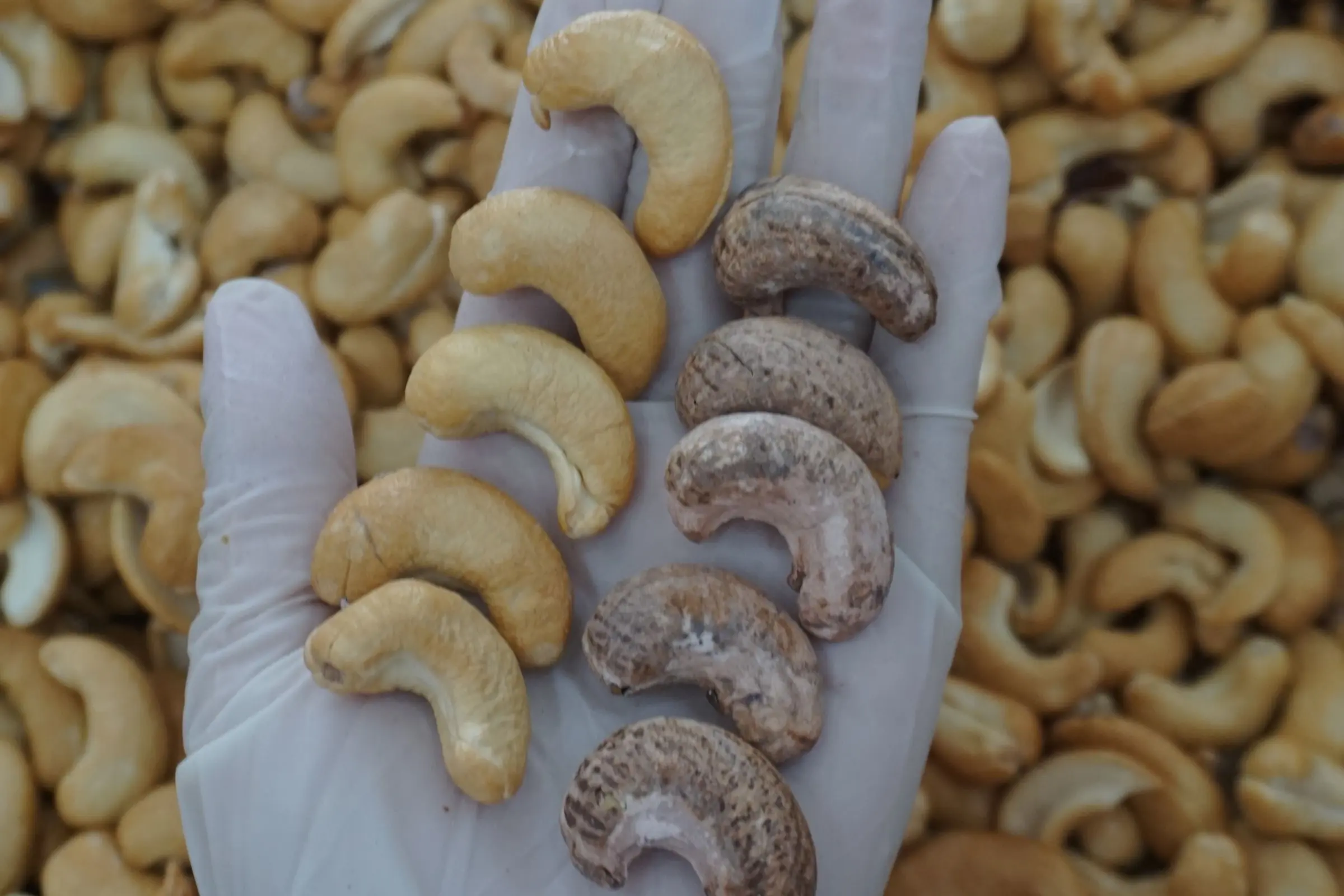
- Colour: white kernels (W) are an even ivory, pale ash-grey or light yellow; darker kernels are graded SW.
- Broken ratio: whole-kernel lots allow only a small share of broken or lower-size kernels, per AFI specifications and the contract.
- Moisture: a maximum of 5% is the common international specification. Higher moisture softens kernels, invites mould and shortens shelf life.
- Foreign matter and defects: no shell, minimal skin, no metal, no live insects; limits on spotted, shrivelled or insect-damaged kernels.
- Taste and smell: characteristic, not rancid, no off-odours.
Aflatoxin limits in the EU and US
Aflatoxins are toxins produced by certain moulds when nuts get damp. Nearly every market tests for them:
- European Union: under Regulation (EU) 2023/915, tree nuts (other than almonds, pistachios and apricot kernels) for direct human consumption are limited to 2.0 µg/kg aflatoxin B1 and 4.0 µg/kg total aflatoxins. Higher limits apply to nuts that will be sorted or processed further.
- United States: the FDA applies an action level of 20 µg/kg (ppb) total aflatoxins for food.
- Other markets (Middle East, China, Australia…) set their own limits; state them in the contract.
Common microbiological parameters
Buyers usually specify parameters such as Salmonella absent in 25 g, E. coli, total aerobic plate count, yeasts and moulds and Enterobacteriaceae. Exact limits depend on the customer and market, and raw kernels have different expectations from roasted ones.
Documents that prove quality
- COA (Certificate of Analysis): the producer's test results for each lot.
- Independent laboratory reports: aflatoxin, microbiology and pesticide residues where needed.
- Third-party inspection: SGS, Intertek, Bureau Veritas and others check quantity, quality and packing, and supervise container loading at the buyer's request.
- Phytosanitary and fumigation certificates where the market requires them.
Frequently asked questions
What is the standard moisture for cashew kernels?
The common international specification is no more than 5% moisture. Many buyers set tighter limits for premium retail.
What is the EU aflatoxin limit for cashews?
For cashews intended for direct human consumption, Regulation (EU) 2023/915 sets 2.0 µg/kg for aflatoxin B1 and 4.0 µg/kg for total aflatoxins.
Should I use third-party inspection?
Yes, especially for a first order or a large lot. Independent inspection confirms quality before the goods leave port and reduces the risk of disputes.
Sources
- Regulation (EU) 2023/915 on maximum levels for certain contaminants in food — eur-lex.europa.eu
- U.S. Food and Drug Administration (FDA), aflatoxin action levels — fda.gov
- Association of Food Industries (AFI), Specifications for Cashew Kernels — afius.org
At VSAP, moisture, foreign matter and broken ratio are measured for every lot; microbiology, aflatoxin testing and third-party inspection are carried out as the destination market requires. See our quality control process.
— VSAP